
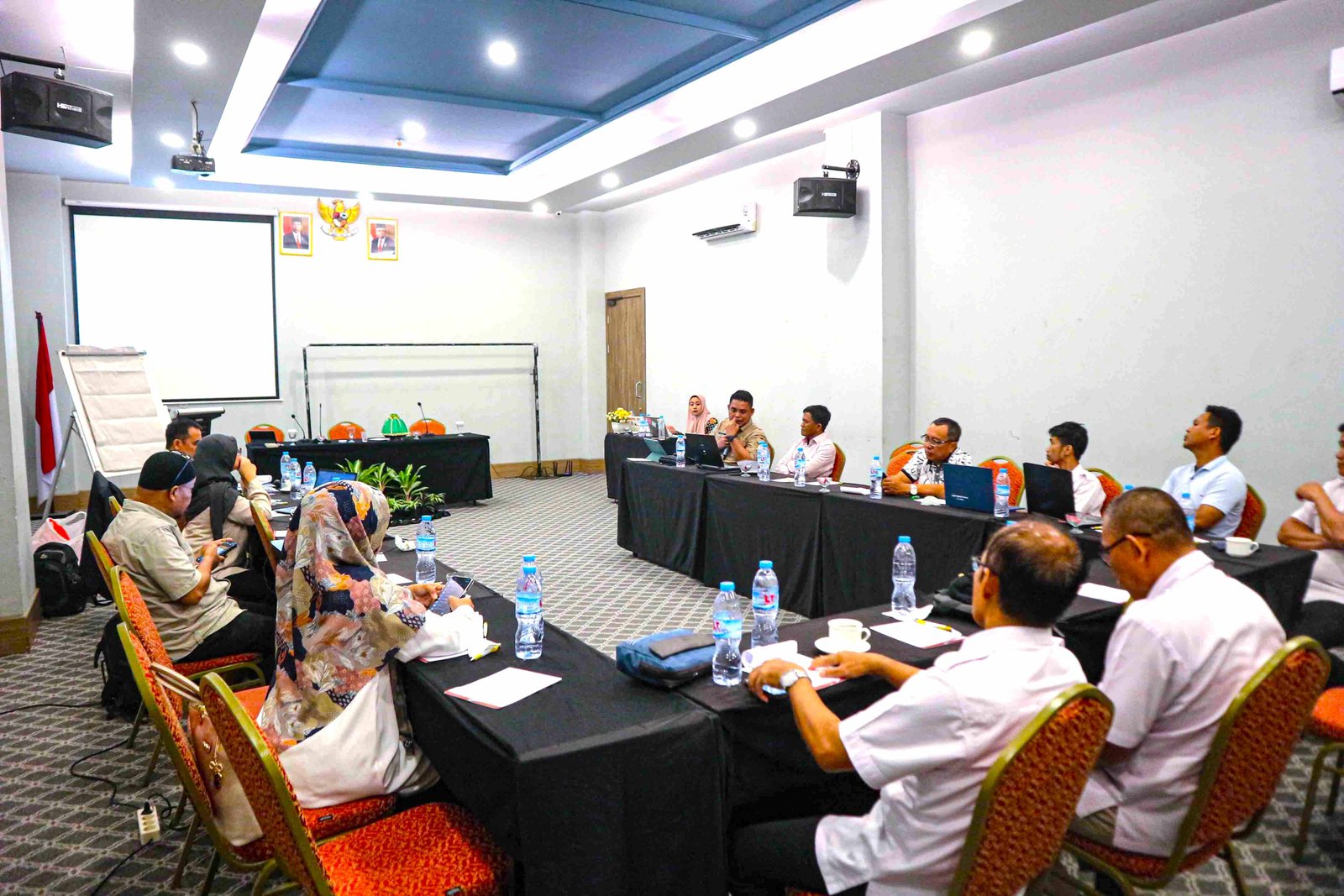
On September 11–12, 2024, the Same Boutique Hotel in Kendari, Southeast Sulawesi, served as an important venue for coordinating and integrating data on proposed Agrarian Reform Object Land (TORA) in North Konawe Regency for the 2024–2025 period. The activity was attended by various Regional Government Organizations (OPDs), including the Ministry of Agrarian Affairs and Spatial Planning/National Land Agency (ATR/BPN), the Department of Plantation and Horticulture, and the Department of Transmigration and Manpower. The objective was to compile and finalize the proposed TORA data for submission, focusing on resolving land ownership issues that frequently pose challenges for local communities.
During the meeting, the Department of Food Crops and Livestock proposed 2,853.29 hectares of land classified as Sustainable Food Agricultural Land (LP2B). Of this total, 2,256.89 hectares are located in Other Use Areas (APL) and will be proposed for land redistribution under the non-forest area scheme. Meanwhile, 596.4 hectares located within forest areas will be submitted to the Agrarian Reform Task Force (GTRA) for forest area release. This proposal aims to provide legal certainty for community members who do not yet have land certificates.
The Department of Transmigration and Manpower also played an active role in the activity by submitting proposals concerning land at UPT Puuhialu and UPT Todoloyo Trans. Land located in APL will be proposed for redistribution under the non-forest area scheme, while land within forest areas will be submitted to GTRA for forest area release. This measure is expected to improve access for transmigrant communities to manage their land legally.
In addition, the Department of Plantation and Horticulture proposed transmigration land that communities have been using for plantation activities. The proposal also included land in APL for redistribution and land within forest areas for forest area release. With support from various OPDs, the agrarian reform process is expected to become more effective and deliver direct benefits to communities.
This coordination activity was particularly important because the proposed programs are closely linked to community welfare. Resolving land ownership issues through the TORA program is expected to accelerate community access to land and increase agricultural and plantation productivity. The productive discussions during the meeting helped ensure that the proposed TORA data was compiled accurately and integrated effectively.
Overall, this activity reflects the North Konawe Regency Government’s commitment to resolving critical land issues affecting local communities. Through effective coordination among OPDs, the proposed TORA data can be prepared on schedule, enabling agrarian reform programs to be implemented effectively for the benefit of local communities.
Through these concrete steps, communities are expected to gain legal certainty over the land they manage. This coordination activity is more than a mere formality; it represents a tangible effort to address existing land tenure challenges and support the success of various local government programs aimed at improving people’s quality of life.