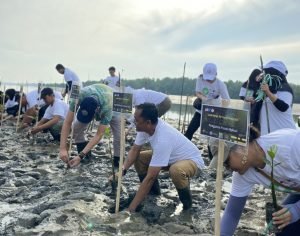

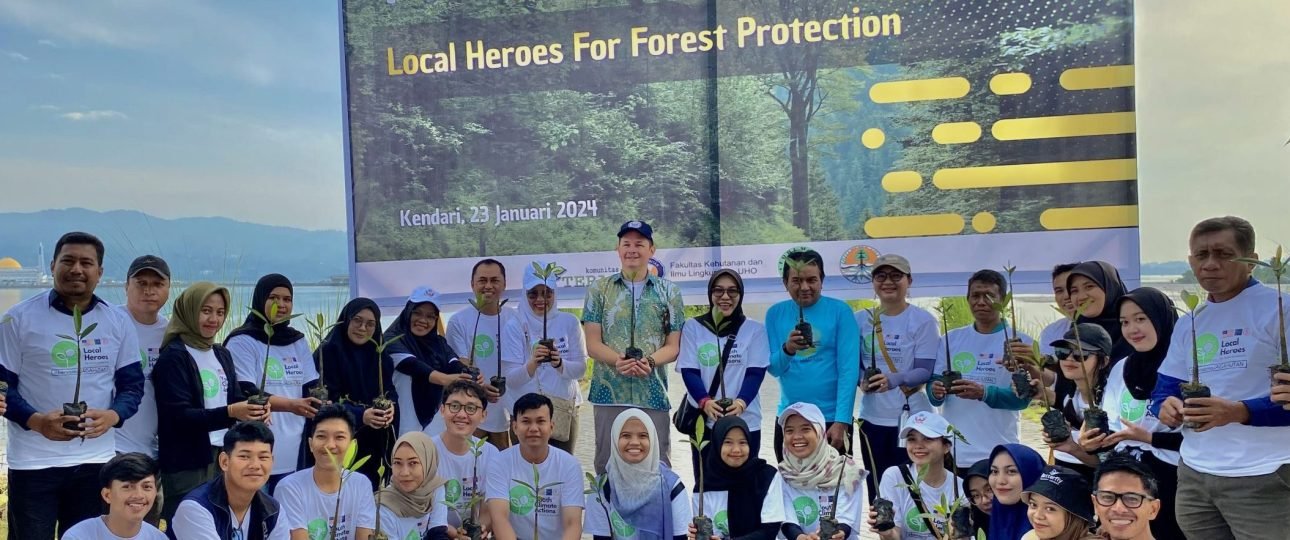
Mangrove forests are vital ecosystems for maintaining the balance between marine and terrestrial environments. They provide significant benefits, including coastal protection, habitats for various species, and a contribution to mitigating the impacts of climate change. Unfortunately, mangrove forests are often targeted by human exploitation and illegal logging. As part of efforts to protect mangrove forests and ensure their sustainability, ALPHA-I organized a regional local workshop entitled "Local Heroes for Forest Protection," where participants worked together to plant mangroves. This activity served as a platform to empower and build the capacity of the younger generation, encouraging them to become more actively involved in forest conservation and sustainable natural resource management. The activity aimed to raise awareness among young people and the wider community about the importance of mangrove forest conservation, while providing participants with knowledge and hands-on experience. In particular, young participants took part in field activities, planting mangroves and engaging in discussions with experts and other stakeholders who are committed to environmental protection. The activity also sought to encourage active participation among young people, especially Local Heroes, in taking concrete action to address deforestation.
Collaboration between local communities and environmental advocates is key to conserving this valuable ecosystem. Participants included the U.S. Consulate General in Surabaya, BPDAS Sampara, the Southeast Sulawesi Provincial Forestry Service, and the Faculty of Forestry at Halu Oleo University. The mangrove planting event was part of broader environmental restoration efforts. The Head of BPDAS Sampara stated that the agency had planted mangroves across 1,500 hectares as part of its efforts to address the degradation of mangrove areas classified as sparse.
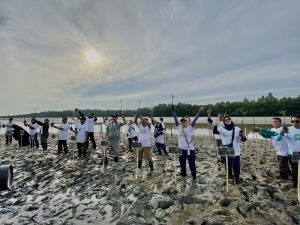
Southeast Sulawesi has approximately 65,000 hectares of existing mangrove forests, which are classified into three categories: dense, moderate, and sparse. Areas with sparse mangrove cover have become a priority for mangrove forest rehabilitation.
As highly effective carbon sinks, mangroves are a key focus of government programs aimed at maximizing carbon storage. Various stakeholders hope to see improvements in coastal areas so that these ecosystems can provide even greater benefits. One of the most important aspects of protecting the planet is consistently educating local communities about the importance of caring for and valuing the environment, rather than relying solely on restoration and rehabilitation efforts. Restoration takes considerable time, substantial funding, and significant human resources. By engaging the younger generation, we can foster greater environmental awareness within communities and help preserve forest and land areas for the future.