
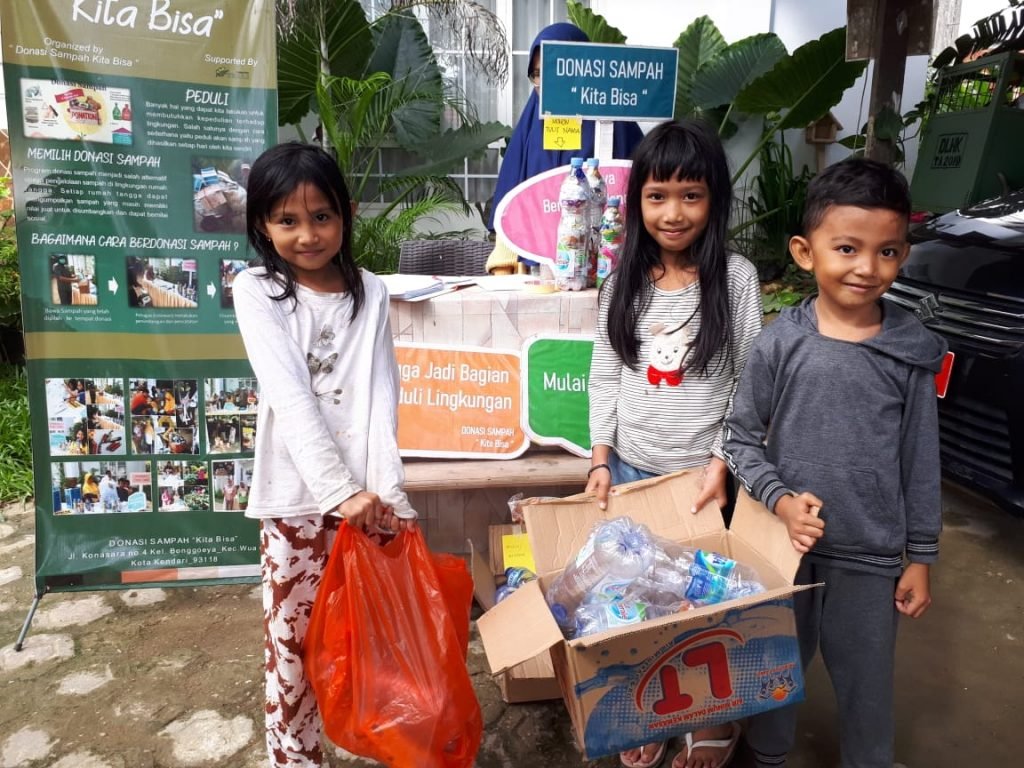
(Finding an Alternative Path Toward Meaningful Sustainability) by: Fitria Nur Indah Djafar Waste management is a familiar topic to us. At both the government and community levels, various efforts have been undertaken to reduce the volume of waste generated continuously, 24 hours a day. Many programs and activities that have been implemented have had to come to a halt due to obstacles and challenges in the field. Even programs supported by substantial budgets have been unable to sustain their operations, let alone ensure long-term sustainability. This means that funding or budgetary support alone does not guarantee success. Several community-based waste management initiatives, such as waste banks and TPS3R (waste collection, sorting, reuse, and recycling facilities), have been abandoned. However, to date, there has been no accurate diagnosis of the underlying causes or identification of appropriate solutions that could serve as a basis for improving current and future waste management systems. The question that arises is: what effective alternatives can revitalize community-based waste management initiatives, enabling communities to initiate them independently while ensuring their sustainability? An initiative in a small neighborhood has attempted to address this concern. The “Kita Bisa” Waste Donation initiative was launched by establishing a donation service using only a flyer for promotion through local WhatsApp groups, a small table, and a standing banner explaining how to donate waste. The service first opened on December 20, 2019. On Sunday morning, from 8:00 to 10:00 a.m., residents came with waste they had sorted at home, such as used plastic bottles and cups from packaged drinking water, paper, cardboard boxes, and egg trays, to the “Kita Bisa” waste donation station in RT 18/RW 05, Bonggoeya Urban Village. Donations from residents were received by the station attendants, recorded according to type, and then weighed. At the end of the donation session that day, all donated waste was given to underprivileged residents who worked as waste pickers. After nearly two years of operation, the “Kita Bisa” Waste Donation initiative has proven to be highly effective and beneficial, both directly for residents and indirectly for the Kendari City Government. The benefits include the following: For Residents/Communities:
- Residents naturally develop the habit of regularly sorting waste at home.
- The frequency of waste disposal and the amount of waste sent to temporary waste collection sites (TPS) are reduced.
- A sense of social responsibility grows through the habit of sharing, as something considered worthless can be highly valuable to others.
- It provides opportunities for social interaction and strengthens relationships among residents and community members.
For the Government
- The volume of waste transported from temporary waste collection sites (TPS) to final waste disposal sites (TPA) is reduced.
- Waste transportation operating costs can become more efficient.
- The service life of final waste disposal sites can be extended.
- Budgets allocated for public outreach and education can be redirected to other activities, such as promotional media and public awareness campaigns.
The final question that this program seeks to answer is: can this initiative offer a viable path toward sustainability? This question can be answered by examining several observations made during the program's implementation, including the following:
- The program can be independently managed by the community because it does not require a dedicated budget.
- It does not require dedicated personnel.
- It does not require a dedicated site, location, or building.
- It does not require operational costs.
- It does not require a fixed schedule and is highly flexible.
- It can be organized anywhere and at any time.
We hope that the lessons learned from the “Kita Bisa” Waste Donation initiative will inspire and encourage anyone to replicate this program as a tangible expression of concern for the continued sustainability of life on our planet.