NbS Tool is an innovative platform specifically designed to support Frontline Organizations, including local NGOs and community groups, in developing high-quality Nature-based Solutions projects. The platform focuses not only on preventing unplanned deforestation and restoring ecosystems through natural regeneration, but also on facilitating the preparation of Project Design Documents (PDDs), carbon certification processes, and the recognition of customary territories. Through an integrated approach, NbS Tool delivers benefits across three key areas: climate, nature, and human well-being.
Complementing NbS Tool, Global Forest Watch (GFW) serves as a comprehensive forest monitoring platform aimed at preventing deforestation, offering more than 200 spatial datasets. The platform provides detailed information on forest changes, land cover, land use, climate-related aspects, and biodiversity.
This digital ecosystem is further enhanced by Forest Watcher, a mobile application that enables direct field validation. With reliable offline capabilities, users can access maps and document findings even in locations without an internet connection. Its field validation features allow users to verify deforestation alerts, take geotagged photos, and collect structured data that can be integrated directly into the GFW system.
The integration of these three platforms creates an efficient workflow: beginning with planning through NbS Tool, continuing with monitoring through GFW, and followed by validation using Forest Watcher. This synergy delivers a comprehensive monitoring system, accurate multi-level validation, and more efficient resource utilization. More importantly, this integration promotes more targeted, data-driven decision-making.
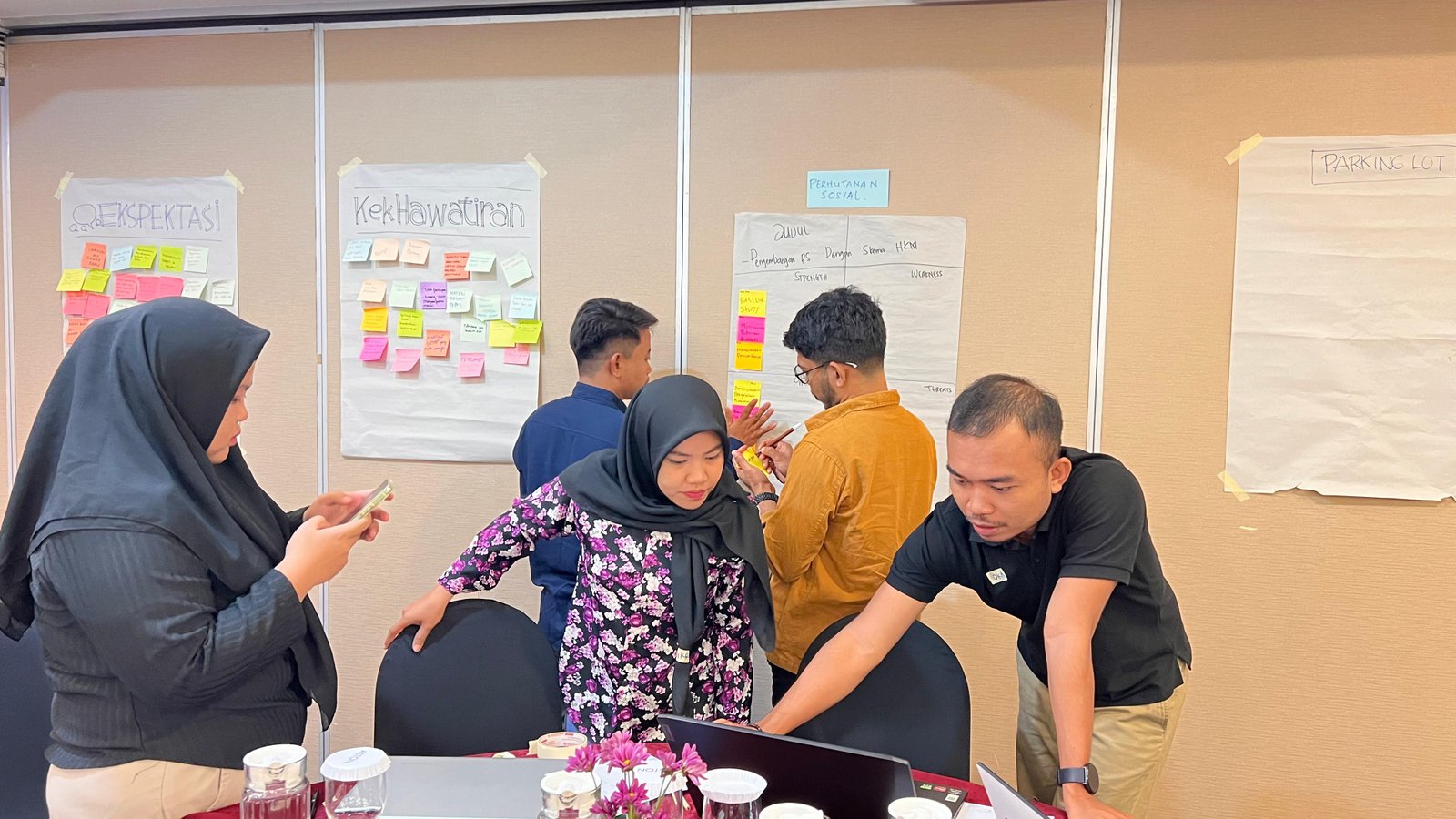
The effectiveness and practical value of these three platforms were recently tested through an intensive training session held on November 5–7, 2024, at Hotel Aston in Makassar. The training brought together various stakeholders, including CSOs (Civil Society Organizations) and NGOs from across Sulawesi, to learn about and explore the potential of these three digital tools in depth.
On the first day, participants were introduced to NbS Tool and received an in-depth understanding of how to use it. The session was highly interactive, with CSOs and NGOs actively providing valuable input for the platform’s development. This feedback played an important role in refining the tool to better meet the needs of users working in the field.
On the second day, participants were divided into several working groups to explore Global Forest Watch (GFW) and Forest Watcher (FW) in greater depth. During the practical sessions, these groups were challenged to analyze specific areas using GFW. They verified satellite imagery, analyzed changes in tree cover over the previous three months, and evaluated annual changes in tree cover. Participants were also trained to identify true alerts and false negatives in the monitoring system, a crucial skill for validating field data.
The third day marked the culmination of the training, with participants divided into specialized groups focusing on biodiversity inventories, social forestry, HCV (High Conservation Value), and tenure conflict mitigation. The discussions were highly productive, featuring intensive information exchange, particularly in conducting SWOT (Strengths, Weaknesses, Opportunities, and Threats) analyses of the three tools. Participants shared experiences from case studies they had encountered in the field and explored how these digital platforms could provide effective solutions to the challenges they faced.
This training demonstrated how digital innovation can bridge the gap between technology and field implementation in conservation efforts. Through hands-on experience and in-depth discussions, CSOs and NGOs gained not only technical knowledge of how to use the tools but also the opportunity to provide valuable feedback from the perspective of field practitioners. This created a positive feedback loop to support the development of platforms that are more responsive to real-world needs.
Following this intensive training, participants from various CSOs and NGOs across Sulawesi expressed strong hopes of incorporating these three digital tools into their day-to-day conservation work. They aim to optimize NbS Tool to develop more structured and sustainable conservation projects in their respective areas of operation. With a deeper understanding of Global Forest Watch and Forest Watcher, communities hope to monitor forests more effectively and respond more quickly to deforestation threats. Participants also hope to build stronger collaborative networks among CSOs and NGOs across Sulawesi to share experiences and best practices in using these three digital platforms. Furthermore, they are committed to sharing the knowledge they have gained with other community members, enabling the benefits of this training to reach more conservation practitioners in the field.