

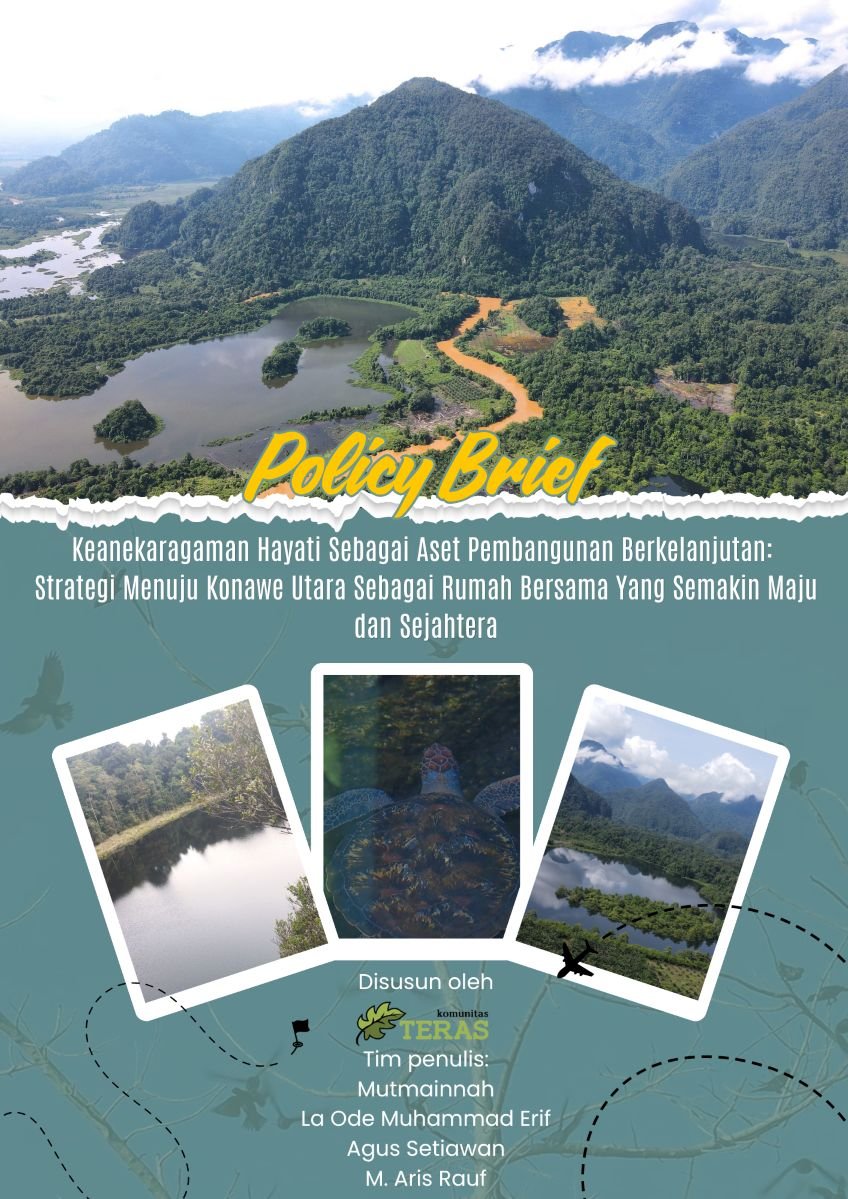
In-depth analysis reveals several major issues in North Konawe, including ecosystem degradation caused by mining and plantations, declining ecosystem service quality, insufficient recognition of community rights, dependence on short-term economic gains, inadequate conservation systems, and limited spatial and ecological data. These issues are interconnected and exacerbate the ecological and socio-economic vulnerabilities of local communities.
This policy brief recommends six key strategies that can be implemented to help North Konawe Regency become more advanced and prosperous through biodiversity-based planning: (1) strengthening protected areas by establishing Essential Ecosystem Areas (KEE) and integrating no-go zones for extractive industries; (2) integrating ecosystem-based management into regional policies; (3) recognizing local communities' management rights; (4) strengthening spatial data systems and ecological monitoring; (5) diversifying the local economy based on biodiversity; and (6) strengthening community institutional capacity.
This approach is expected to support North Konawe in becoming “a shared home that is increasingly advanced and prosperous,” in line with the provincial development vision for 2025–2029. By positioning biodiversity as a strategic asset in planning and development, North Konawe Regency can not only improve community welfare and strengthen local cultural identity but also maintain ecological functions and reduce disaster risks in a balanced manner.

For more details, download the following PDF