

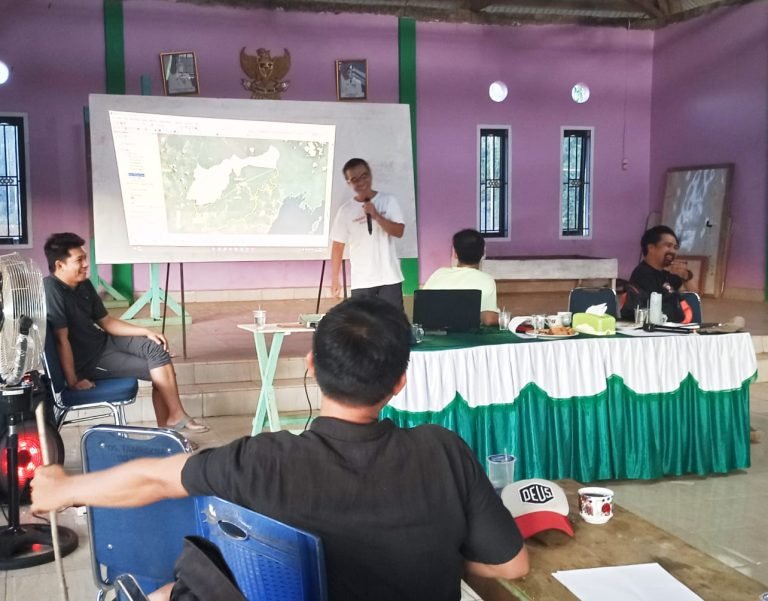
Villages serve as supporting areas and hinterlands for cities, making sound spatial planning essential. This requires a participatory process that involves all human resources and stakeholders within the village. Village spatial planning can help prevent land-use conversion, support economic activities, and improve community welfare. A common characteristic of village design and spatial planning is its informal and participatory nature. Various stakeholders can be involved in the process, and their participation should be harnessed to strengthen the village’s vision. This vision, together with village design and spatial planning, should be integrated into comprehensive village development plans covering both physical and non-physical aspects. Furthermore, although the context is local and rural, ideas for village design and spatial planning should also be considered from a global perspective.
SLUP is a regional planning method that places local communities and villages at the center of the planning process. Developed by the Participatory Mapping Network (JKPP), this method aims to support and provide critical input for district or city Spatial Plans by documenting existing conditions and the forms of territorial management already practiced by communities. SLUP activities include participatory mapping, reaching agreements on village boundaries, developing spatial management models, and asking communities to identify and demonstrate their existing spatial management systems.
The resulting SLUP documents are highly valuable for villages and subdistricts. Until now, village maps have generally been used only as appendices to spatial planning documents. However, SLUP maps are far more comprehensive and genuinely needed because they contain information about how communities manage and use their land and territories.
SLUP was implemented in five villages in North Konawe Regency, Southeast Sulawesi Province, with assistance from JKPP, SLPP Southeast Sulawesi, and Komunitas Teras. The five villages were Landawe Utama and Tambakua in Landawe Subdistrict; Padalere Utama and Lamparinga in Wiwirano Subdistrict; and Polora Indah in Langgikima Subdistrict.